Is your supermarket layout wasting space and making products harder to see than they should be? Many store owners lose sales every day simply because their shelving system is not well planned or properly chosen.
Supermarket racks play a key role in how customers move through a store and how easily they find products. A good shelving system can increase visibility, improve shopping flow, and directly boost sales.
In 2026, choosing the right supermarket shelving is no longer just about buying racks. It is about selecting a system that fits your store size, product type, and long-term business plan. Materials, structure, and supplier choice all matter.
In this guide, you will learn how to select the right supermarket racks, understand pricing factors, and plan installation in a practical way. Whether you are opening a new store or upgrading an existing one, this will help you make better sourcing decisions.
Key Takeaways
- Supermarket racks directly impact sales by improving product visibility and store flow
- Gondola shelving and wall shelving are the two most common and practical systems
- Pricing depends on materials, design, customization, and order volume—not a fixed range
- Choosing a reliable manufacturer is key for quality, cost control, and long-term use
- Proper installation ensures safety, durability, and better space efficiency
What Are Supermarket Racks and Why Do They Matter in 2026?
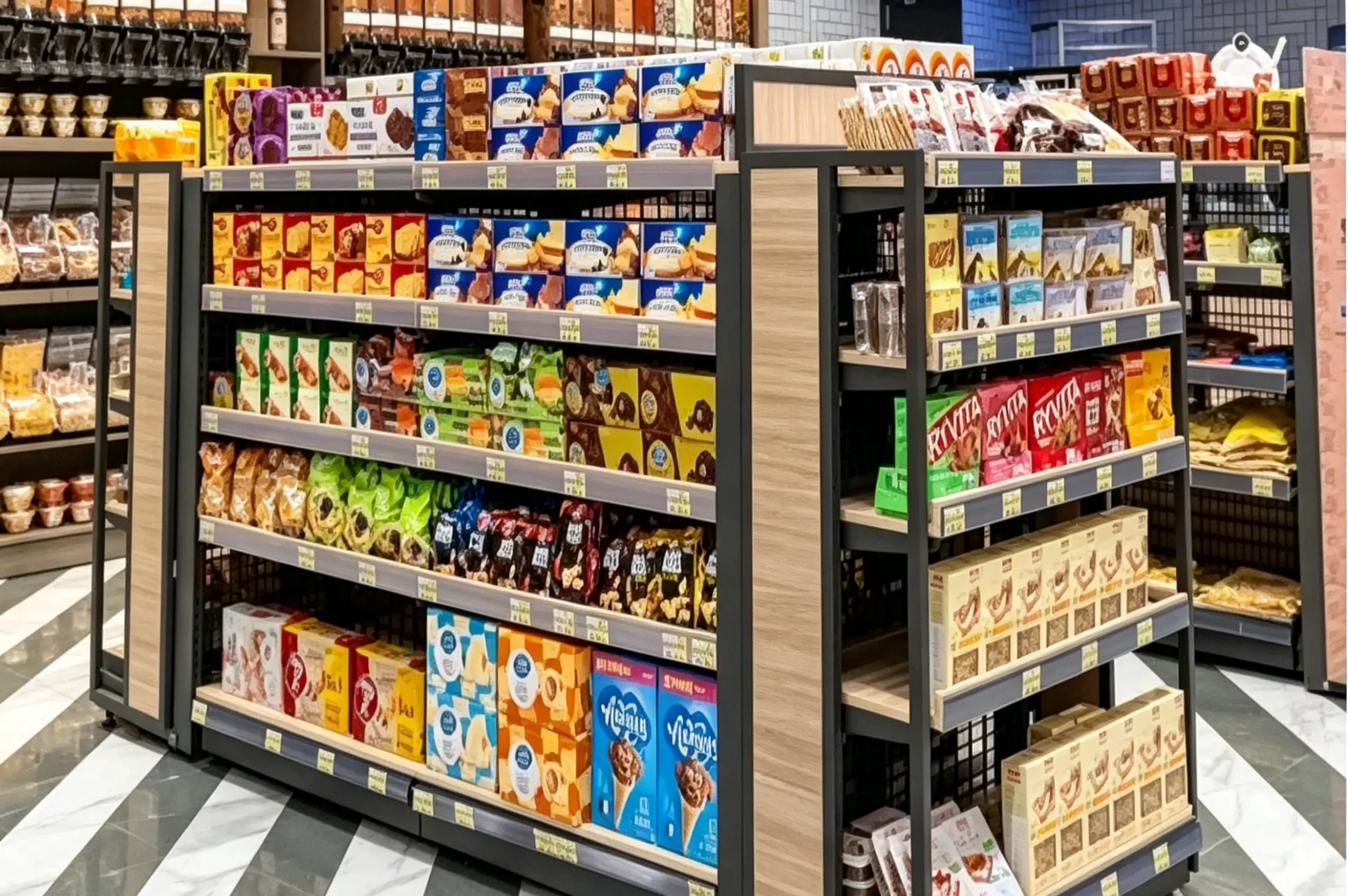
Supermarket racks are the main structure used to display and organize products in retail stores. Without them, a store becomes difficult to navigate, and products lose visibility.
In 2026, supermarket racks are no longer just display tools. They are part of the store’s sales strategy. A well-planned shelving system can guide customer flow, highlight key products, and increase impulse buying.
Types of Supermarket Racks
Supermarket racks come in different structures and designs, and each type serves a specific role in store layout, product display, and sales performance.
1.Gondola Shelving
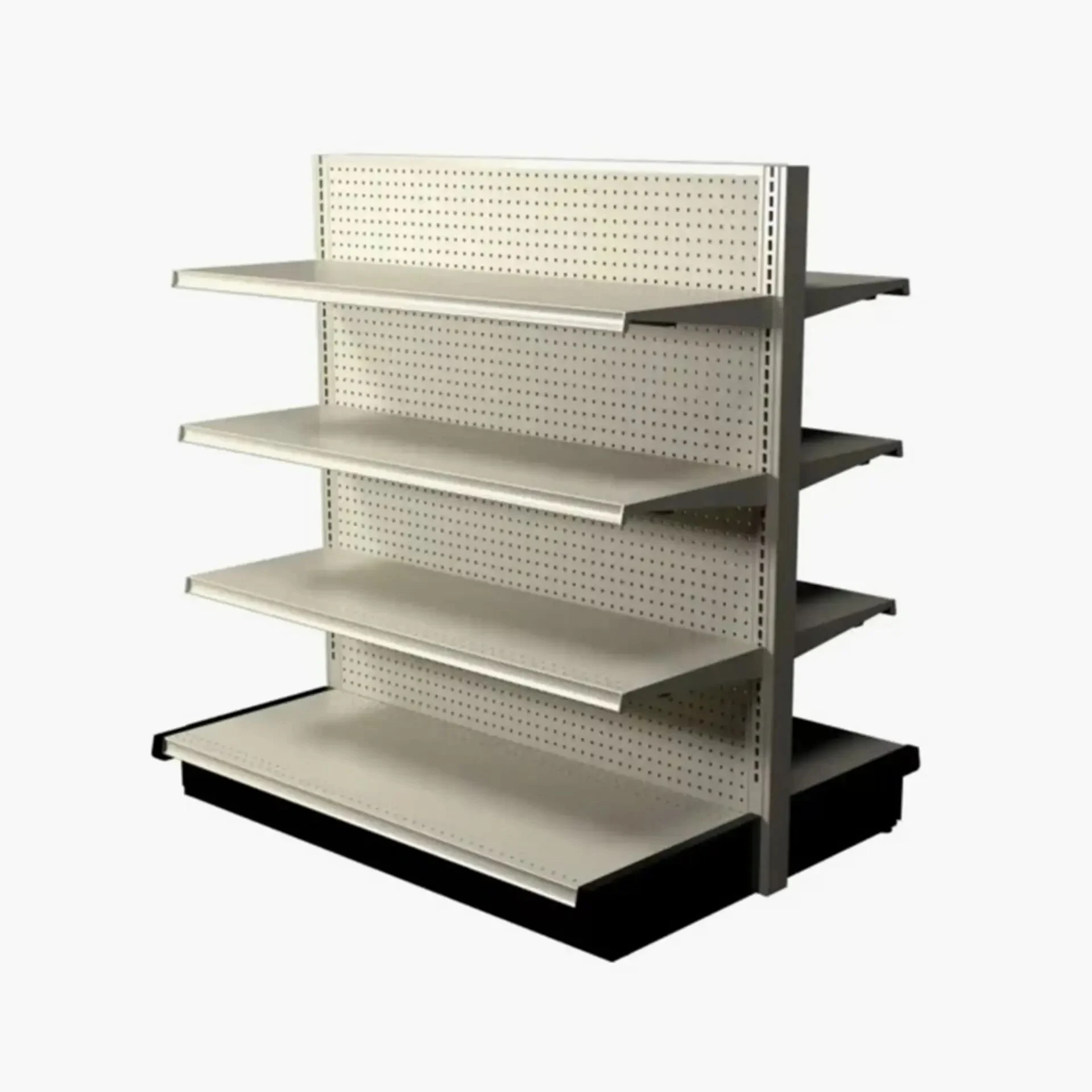
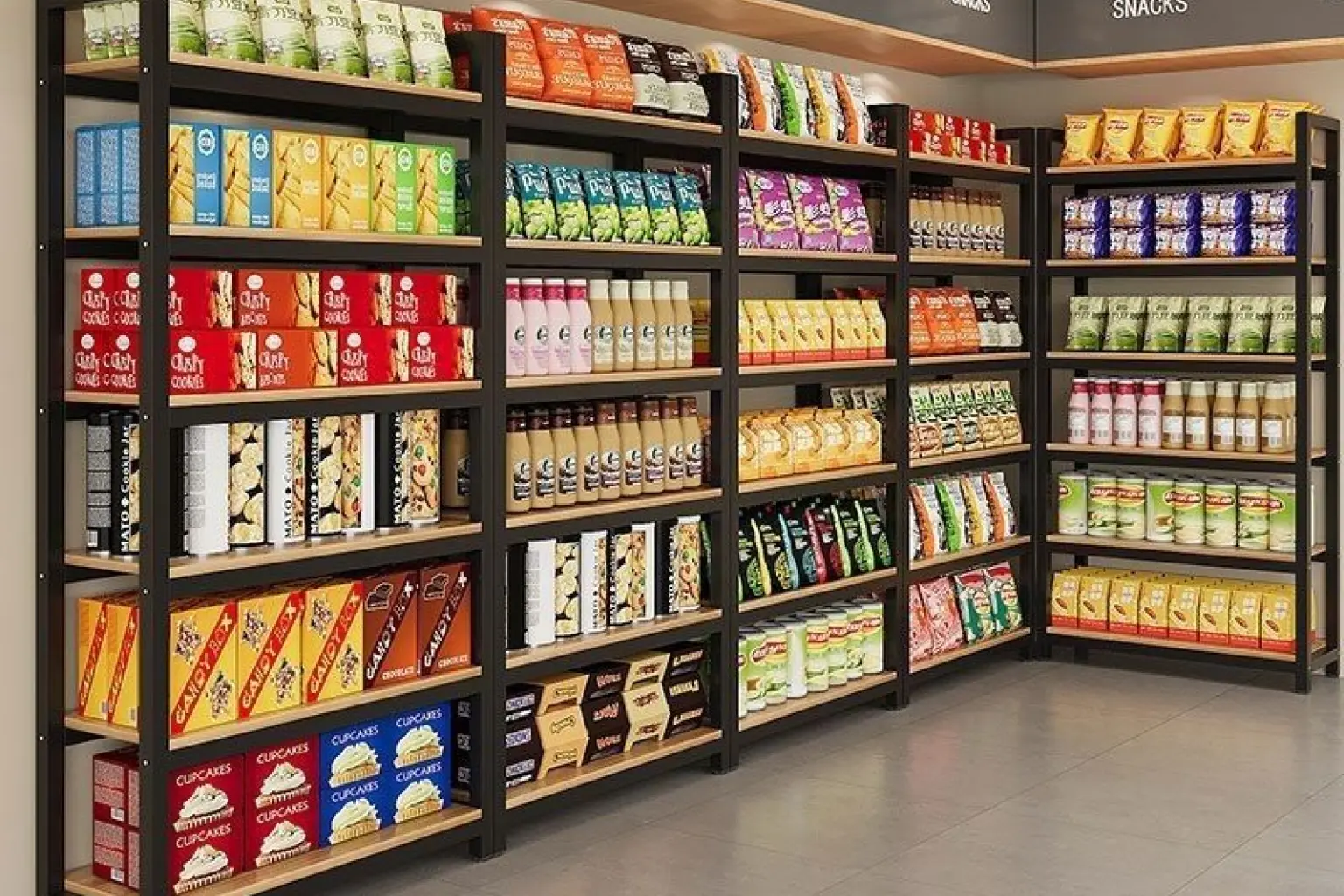
Gondola shelving is the most common type of supermarket rack and is usually placed in the center of the store. It is a freestanding system that forms the main aisles in supermarkets.
This type is popular because it allows product display on both sides, which increases space efficiency and product visibility. Shelves are adjustable, so retailers can change height based on product size.
Key features:
- Double-sided structure for aisle displays
- Highly modular and adjustable design
- Suitable for most daily FMCG products
- Easy to reconfigure when store layout changes
2.Wall Shelving
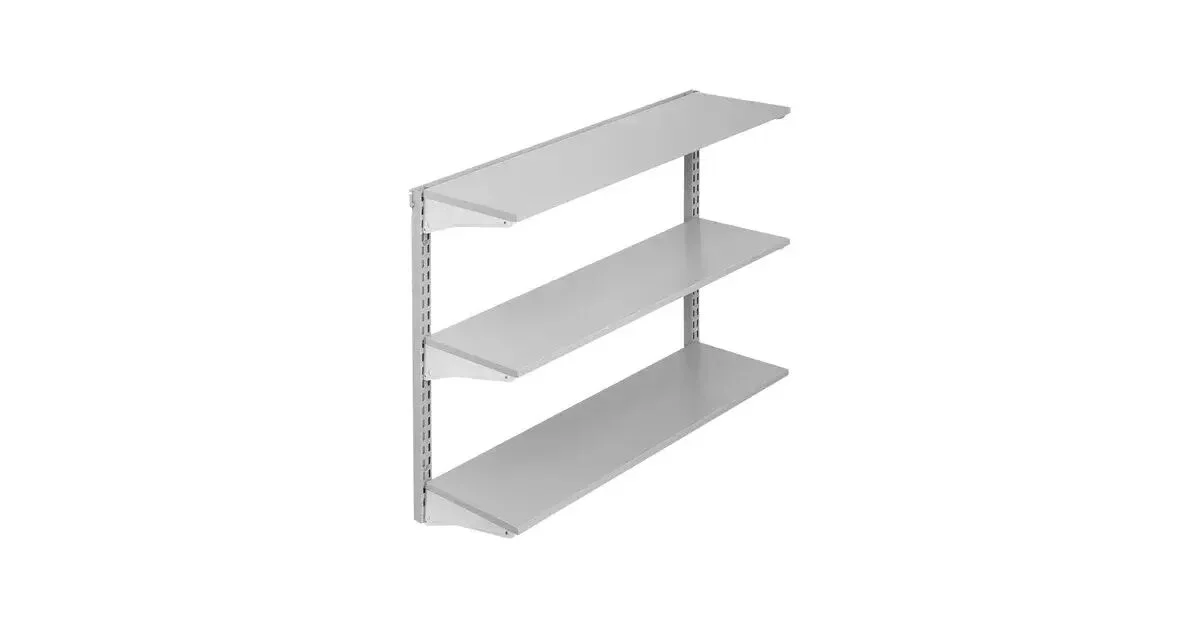
Wall shelving is installed along the perimeter walls of a store. It uses vertical space to increase storage without occupying central floor areas.
This type is ideal for maximizing limited retail space and keeping the store layout open and easy to navigate. It is often used for stable product categories or high-margin items.
Key features:
- Single-sided design fixed to walls
- Maximizes vertical storage space
- Helps keep central aisles open
- Often used for household goods and packaged foods
3.Supermarket Display Racks (Promotional Racks)
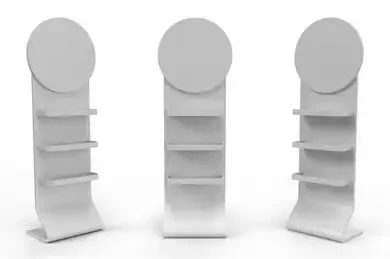
Supermarket display racks are used to highlight specific products, especially promotions, new arrivals, or seasonal goods.
They are designed to attract attention quickly and are usually placed in high-traffic areas.
Key features:
- Focused on product visibility and impulse buying
- Flexible placement inside the store
- Often used for short-term campaigns
- Designed to stand out from regular shelving
4.End Cap Displays
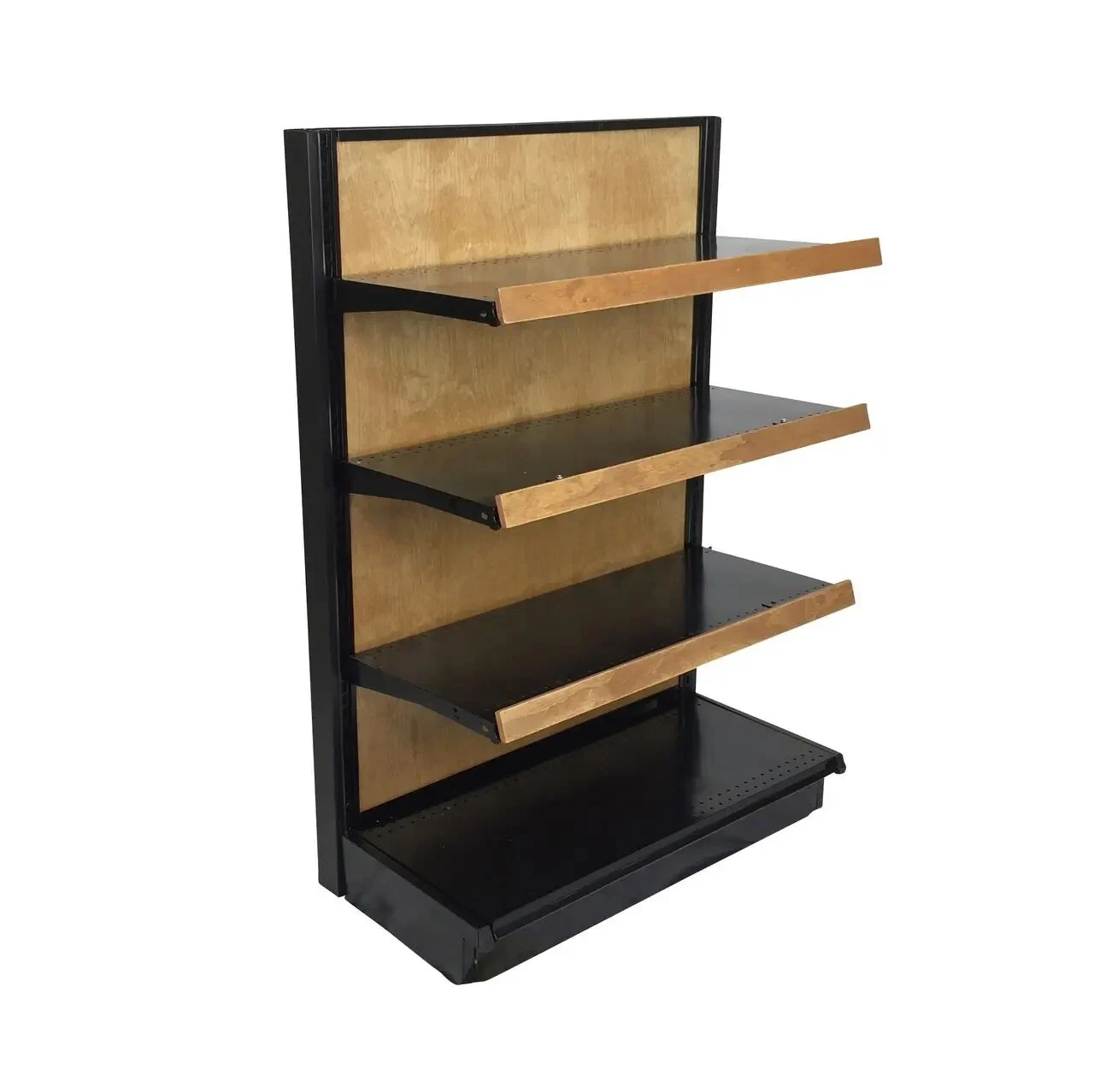
End cap displays are located at the end of supermarket aisles and are considered one of the most valuable retail spaces.
They are highly visible and often used to promote special offers or high-margin products.
Key features:
- Positioned at aisle ends for maximum exposure
- Strong impact on impulse purchase behavior
- Used for promotions and seasonal campaigns
- Works as a “decision point” for shoppers
5.Customized Display Solutions
Customized display solutions are tailored shelving systems designed according to specific store layouts, branding needs, or product categories.
Key features:
- Fully adjustable design based on requirements
- Supports brand identity and store theme
- Can combine multiple shelving types
- Often used by chain stores and large retailers
Custom solutions help supermarkets create a more unique and efficient shopping experience, especially in competitive retail markets.
Why Supermarket Racks Matter Today
Supermarket racks directly influence both operational efficiency and customer behavior. A good system helps retailers:
- Improve product visibility at eye level
- Control customer movement inside the store
- Increase exposure of high-margin items
- Make restocking and inventory management easier
In modern retail environments, especially in 2026, stores are more focused on experience and efficiency. This makes shelving systems a critical part of store planning, not just a background fixture.
How to Choose the Right Supermarket Racks
Choosing supermarket racks is not only about size or price. It is also about how customers see and interact with products. In 2026, most retailers design shelving based on shopper behavior, visibility, and store flow.
Focus on Shopper Visibility (Eye-Level Strategy)
One of the most important rules in retail is simple: eye-level is buy-level.
Products placed at eye level get the most attention because customers naturally look straight ahead when walking through aisles.
Key ideas:
- Eye-level zone is the most valuable shelf space
- High-margin products should be placed here
- Adjustable shelving helps control product positioning
Design Around Store Layout and Customer Flow
Supermarket racks should guide how customers move through the store. In modern retail design, stores avoid cluttered layouts and focus on smooth navigation paths.
Important considerations:
- Aisle width should allow easy movement
- Shelving should support clear walking paths
- Avoid overcrowded or confusing layouts
A good rack system helps customers naturally explore more areas of the store.
Match Rack Type to Product Behavior
Different products need different shelving strategies.
- Fast-moving daily goods → gondola shelving
- Premium or promotional items → display racks or end caps
- Stable bulk products → lower shelves or stoage-focused racks
- Brand storytelling → customized display zones
Use Vertical Space Smartly
Modern supermarkets rely heavily on vertical merchandising.
Shelves are usually divided into zones:
- Eye level → highest sales impact
- Lower shelves → bulk or essential goods
- Upper shelves → low-frequency or storage items
Adjustable shelving systems make it easier to optimize these zones and adapt to different product sizes.
Choose Flexibility Over Fixed Design
Retail needs change often. Promotions, seasons, and product updates all require quick adjustments.
That is why modular shelving systems like gondola racks are widely used. They allow:
- Easy height adjustment
- Fast layout changes
- Reusable structure for different store formats
Supermarket Racks Pricing: What Affects the Quotation?
The price of supermarket racks changes based on materials, structure, and project requirements. In most cases, suppliers calculate pricing based on design complexity and total order size. This makes every quotation slightly different.
Understanding what drives the cost helps buyers avoid low-quality offers and make better sourcing decisions.
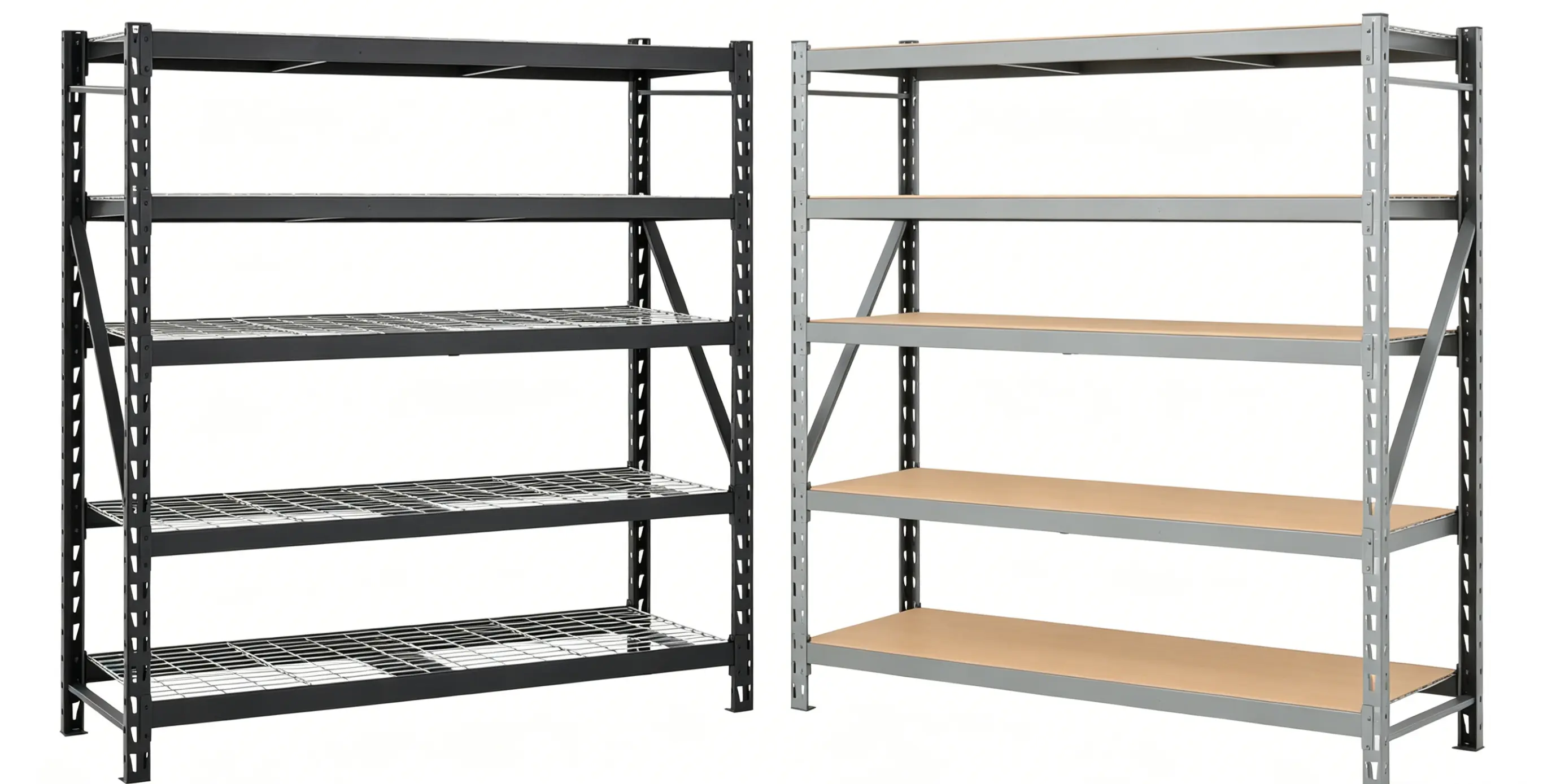
Material Quality and Steel Thickness
Material is the biggest cost factor in supermarket racks.
Thicker steel means higher strength but also higher price. Heavy-duty steel is more expensive than basic thin sheets. This difference directly affects durability and long-term use.
Key points:
- Steel thickness impacts strength and price
- Upright columns carry most of the load
- Better materials reduce long-term replacement costs
Surface Finish and Production Quality
Common finishes include powder coating or stainless steel treatment. Higher-quality finishes improve rust resistance and appearance but increase production cost.
Key points:
- Powder coating is standard and cost-effective
- Stainless steel is more expensive but more durable
- Better finish improves hygiene and lifespan
Customization and Design Requirements
Adding brand panels, special colors, or integrated lighting increases production complexity. These features are often used in modern retail stores to improve visual appeal.
Key points:
- Custom colors and branding increase cost
- LED lighting and accessories add extra charges
- Modular design helps reduce customization cost
Order Quantity and Factory Pricing
Manufacturers can optimize production when making large quantities of the same product. This lowers cost per unit and improves efficiency.
Key points:
- Larger orders = lower unit cost
- Small orders usually have higher pricing
- Factory-direct sourcing offers better flexibility
Logistics and Hidden Costs
Shipping and installation are often not included in the first quotation.
For international buyers, packaging design also matters. Knock-down (KD) structures help reduce shipping volume and cost.
Key points:
- Shipping is a major hidden cost factor
- KD design reduces transport volume
- Installation and assembly may be extra charges
Installation Guide for Supermarket Shelving Systems
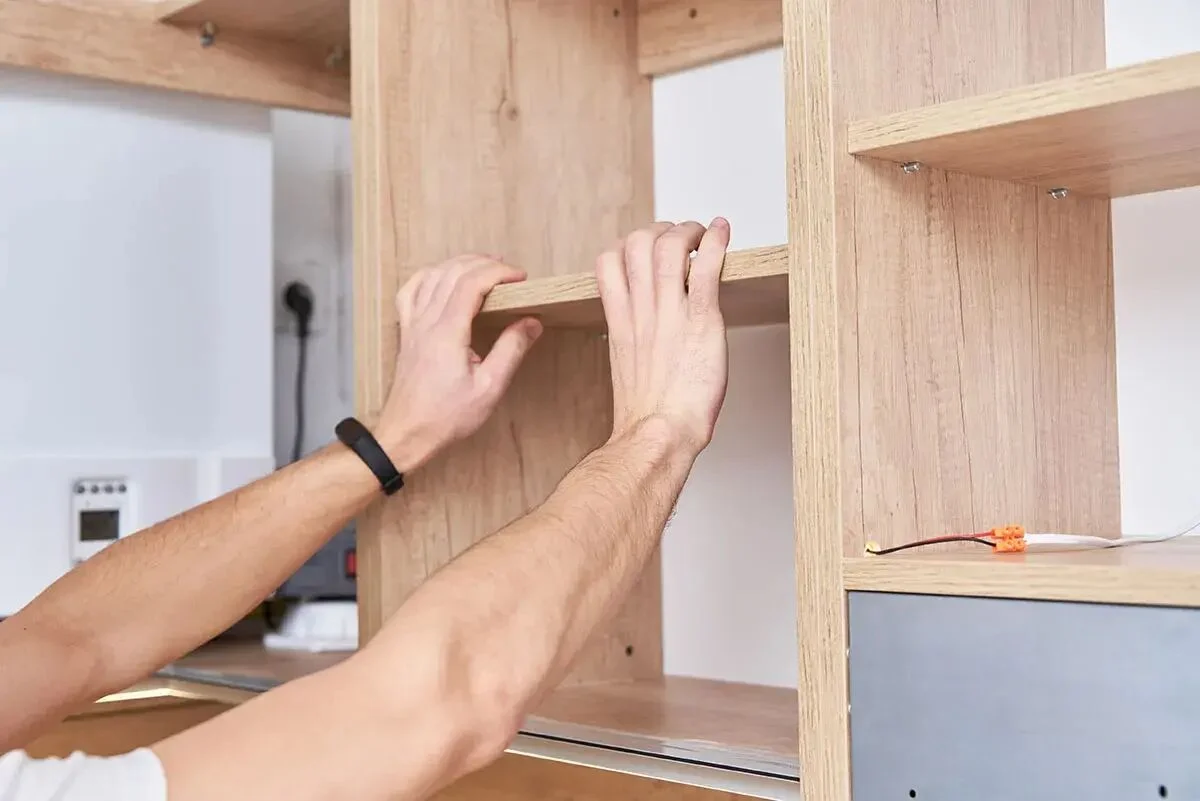
Proper installation of supermarket racks is very important. A poorly installed shelf can tilt, loosen, or even collapse under load.
In 2026, most supermarket shelving systems use a modular, tool-friendly structure.
1. Pre-Installation Preparation
Before starting, make sure all parts and tools are ready.
Check all components and hardware
Confirm floor is flat and clean
Measure and mark store layout
Wear basic safety gloves
2. Build the Main Frame Structure
The first step is assembling the basic frame of the shelving unit.
Steps:
Connect upright posts with base parts
Lock the structure into position
Ensure all posts are firmly seated
3. Install Bottom Support and Back Panels
Next, install the bottom support rail and back panels. These parts improve stability and help fix the structure.
Steps:
Attach bottom rail to lock width
Slide back panels into upright grooves
Make sure panels are fully secured
4. Level the Structure
Leveling is one of the most important steps in supermarket shelving installation.
Steps:
Use a level tool to check balance
Adjust base feet if needed
Ensure all sides are vertical
5. Install Shelves and Accessories
After the frame is stable, shelves and accessories can be added.
Steps:
Insert shelf brackets at desired height
Place shelves evenly on both sides
Add hooks, dividers, or price strips if needed
Make sure shelf spacing matches product size and category.
6. Anchor the Shelving
For tall or heavy-duty supermarket racks, anchoring is very important.
Key safety points:
Fix wall units into wall or solid structure
Use floor anchors for freestanding units
Avoid moving shelves after full assembly
7. Final Safety Check
Before use, always do a final inspection.
Checklist:
All parts are locked tightly
Shelves are evenly balanced
No loose connectors
Aisles are clear for customer movement
Also ensure proper aisle space is maintained for safe walking and shopping.
Working with a Reliable Supermarket Racks Manufacturer
A reliable supplier directly affects product quality, cost control, and long-term store performance.
In 2026, many retailers prefer working with factory suppliers instead of middle traders. This helps reduce cost and improves customization flexibility.
Consistent Product Quality
Key points:
- Controlled production standards
- Better material selection
- Stable welding and finishing quality
Consistent quality helps avoid problems like bending, rusting, or unstable structures during long-term use.
Strong Customization Ability
A good supermarket racks manufacturer should be able to adjust products based on real store needs.
Key points:
- Custom sizes for different store spaces
- Flexible shelf height and structure options
- Branding and color customization
Cost Efficiency from Factory Direct Supply
Working directly with a manufacturer removes extra middle costs.
Key points:
- More competitive pricing
- Better control over budget
- Clearer quotation structure
End-to-End Project Support
A reliable supplier should do more than just produce racks. They should support the whole process.
This includes:
- Layout planning support
- Production and quality inspection
- Packaging and export handling
Long-Term Partnership Value
Key points:
- Faster response for future orders
- Easier product updates or redesigns
- Stable supply for store expansion
Long-term cooperation helps retailers maintain consistent store quality across different locations.
Future Trends in Supermarket Shelving (2026 and Beyond)
Supermarket shelving is changing quickly. In 2026 and beyond, supermarket racks will focus more on flexibility, data use, and customer experience. Retailers are now using smarter systems to improve both sales and store efficiency.
Modular and Flexible Shelving Systems
One of the strongest trends is flexibility.
Stores now prefer shelving that can be changed quickly. This helps them adjust layouts for seasons, promotions, or new product lines.
Key points:
- Easy to reconfigure layouts
- Supports fast store updates
- Reduces renovation cost and time
Modular gondola systems are becoming the standard in modern supermarkets.
Smart Shelving and Data Integration
Modern supermarket racks can include sensors, digital labels, and tracking systems. These tools help retailers manage stock and understand customer behavior.
Key points:
- Real-time inventory tracking
- Digital price updates
- Better understanding of customer interaction
AI-Driven Store Layout Optimization
Retailers use AI and heatmaps to decide where products should be placed. This improves visibility and increases sales.
Key points:
- Better product placement decisions
- Higher conversion rate for key items
- Reduced wasted shelf space
Sustainability and Lighter Materials
Manufacturers are developing lighter and recyclable shelving materials. This reduces transport cost and supports sustainability goals.
Key points:
- Use of recyclable steel
- Lighter structures for easier installation
- Lower shipping cost and carbon footprint
Experience-Focused Retail Design
Stores are moving away from purely functional layouts. Instead, they use shelves to create visual impact and improve customer engagement.
Key points:
- More visual merchandising zones
- Better product storytelling
- Increased focus on customer experience
FAQ: Supermarket Racks and Shelving Systems
What is the difference between gondola shelving and wall shelving?
Gondola shelving is placed in store aisles and is double-sided. Wall shelving is fixed along walls and is single-sided, saving floor space.
What is gondola shelving?
Gondola shelving is a freestanding retail rack system used to create supermarket aisles. It is adjustable and widely used for product display in most stores.
How do I choose the right supermarket racks?
Choose based on store layout, product type, and traffic flow. Gondola shelving is best for main aisles, while wall shelving works for perimeter space.
Can supermarket racks be customized?
Yes. Most manufacturers offer custom sizes, colors, branding panels, and accessories to match different store designs.
What affects supermarket rack pricing?
Pricing depends on material thickness, design complexity, customization level, and order quantity. Shipping and installation also affect total cost.
Conclusion
Choosing the right supermarket racks is not a small detail. It has a direct impact on how your store looks, how customers move, and how much they buy. A good shelving system makes products easy to see and easy to reach.
In 2026, the focus is clear. Retailers need flexible layouts, strong visibility, and reliable shelving systems. Gondola shelving, wall shelving, and display racks all play different roles, but they must work together as one system.
If you are planning to open a new store or upgrade your supermarket layout, choosing the right supplier is the key step. A professional manufacturer can help you design, customize, and produce shelving that fits your exact needs.
👉 Looking for a reliable supermarket rack solution?
DAHO is a factory-based supplier specializing in customized supermarket shelving systems, including gondola shelving, wall shelving, and full store display solutions. Contact us today to get a tailored quotation and start building a more efficient retail space.