An end cap can put a promotion in the shopper’s path, but the promotion still needs the right hardware. A hanging accessory range, a stack of snack multipacks, and a chilled-drink offer should not use the same fixture just because all three sit at an aisle end.
The practical test is simple: can the fixture hold the SKU, show the price, stay inside the approved aisle space, and be refilled without disrupting the store? This guide compares 10 end cap display fixtures against those everyday requirements.
Key Takeaways
- Adjustable gondola end caps suit repeatable packaged-goods promotions because shelf pitch can change with the assortment
- Pegboard, slatwall, wire baskets, dump bins, tiered shelves, mesh panels, and power wings each solve a different presentation problem
- Refrigerated end caps require an equipment, power, cleaning, service, and food-safety plan before the fixture is selected
- Specify product dimensions, weights, facings, replenishment, loading, anchoring, and site constraints before approving the shop drawing
What is an end cap display fixture, and how should you choose one?
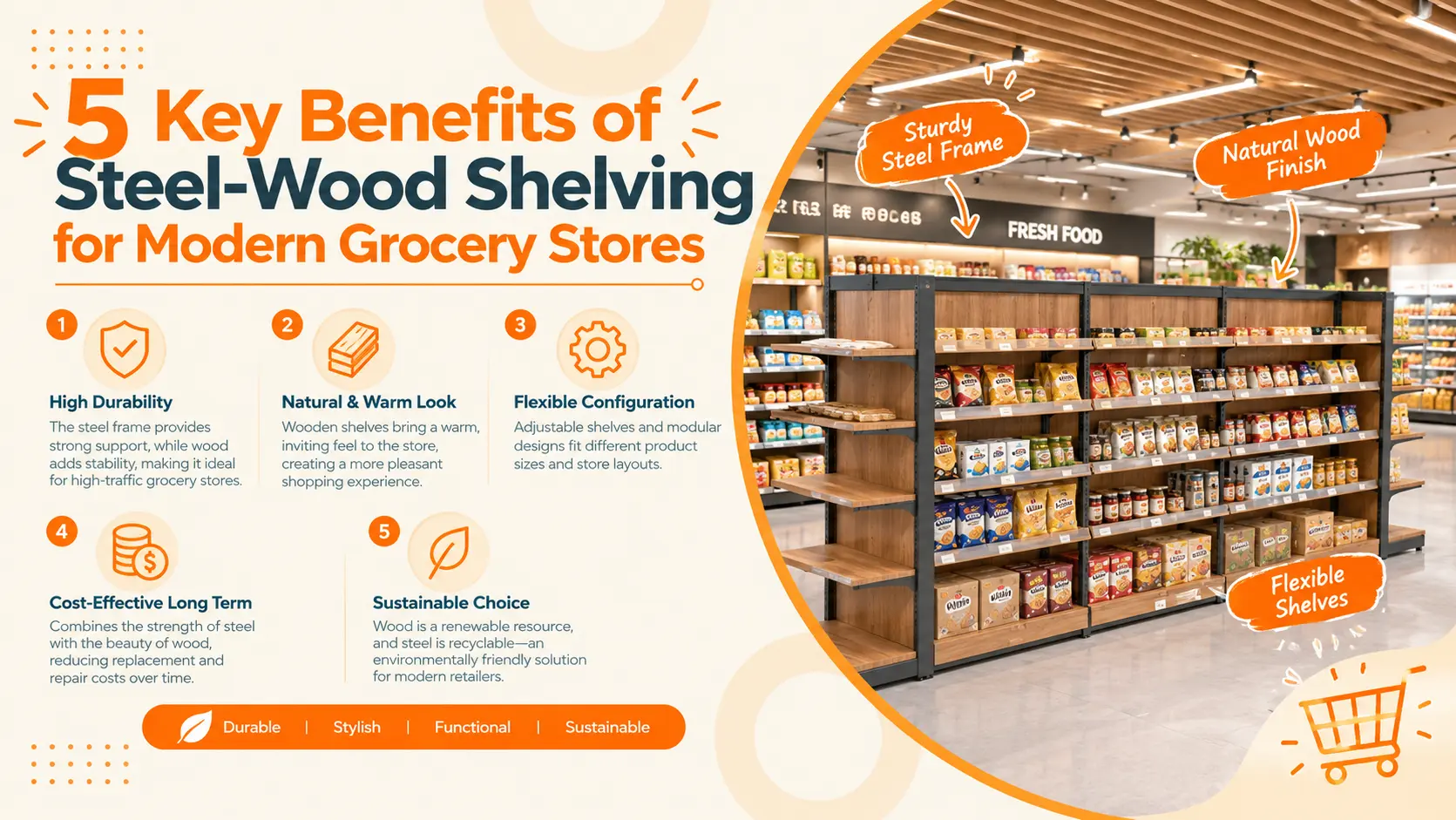
An end cap is the display at the exposed end of a gondola run. It may attach directly to a gondola system or stand as a separate promotional unit. It can use adjustable shelves, a solid back panel, pegboard, slatwall, wire baskets, hooks, price rails, or a sign holder. Each choice changes what staff can stock, shoppers can see, and the fixture can safely carry.
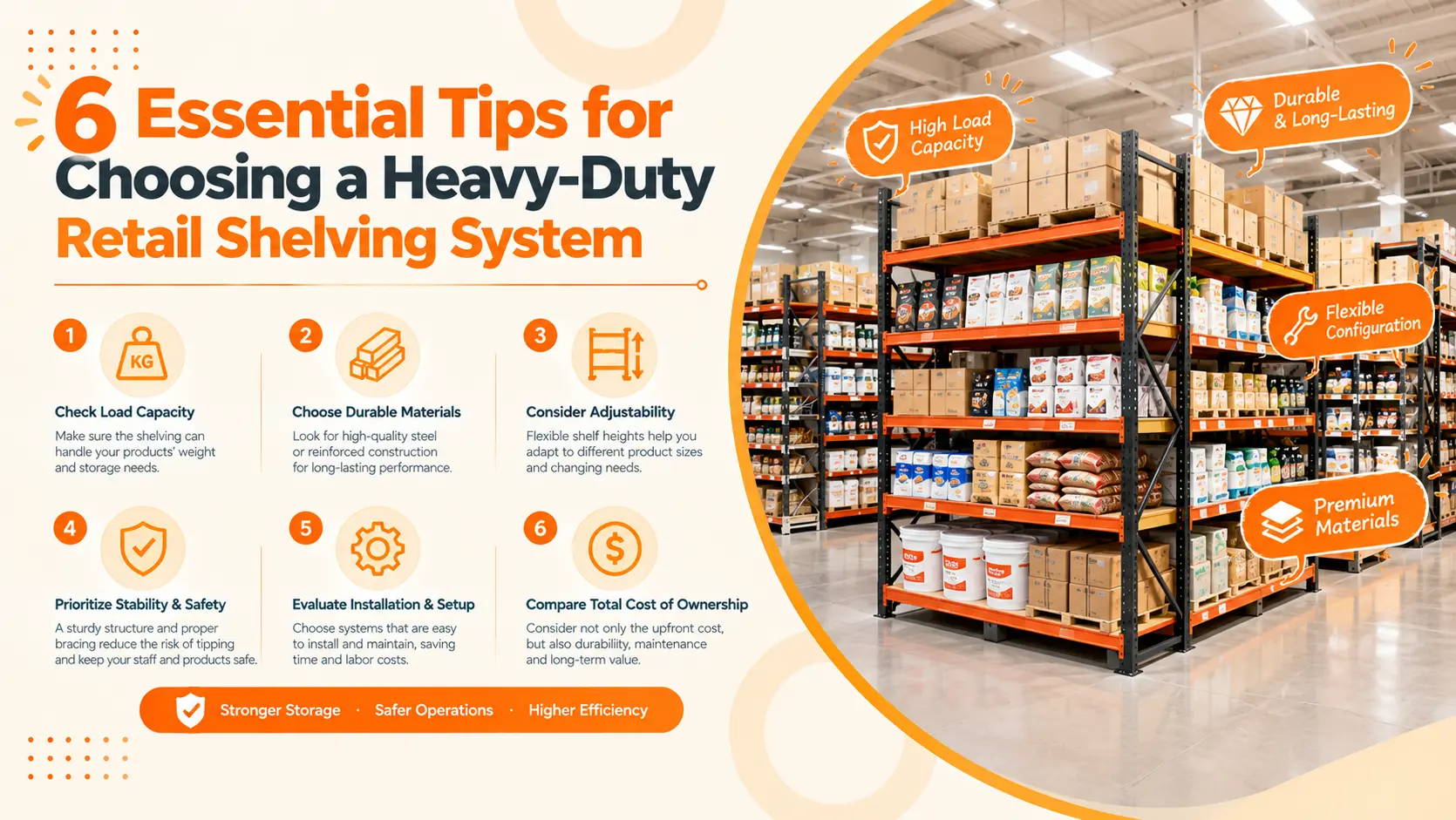
Start the brief with the product. Record the pack width, height, depth, unit weight, case weight, and number of facings. Then decide whether the customer needs to lift, hang, browse, or compare the item. A small blister pack needs a different presentation from a heavy carton of detergent.
For the product range itself, see DAHO’s end cap shelving options. The list below helps a buyer decide what to ask for before requesting a quotation.
The most common mismatch is not a bad-looking end cap. It is a good-looking end cap paired with a replenishment routine it cannot support. A fixture that needs frequent resets should be judged by staff access and changeover time as seriously as its front-of-store appearance.
1. Adjustable gondola end cap: best all-rounder for packaged grocery
An adjustable gondola end cap is usually the first fixture to consider for boxed, canned, bottled, and bagged goods. Its practical advantage is simple: the shelf pitch can follow the pack height, so a promotion can change without replacing the entire end-cap structure.

Specify this format around:
- Compatible uprights, base components, and finish for the adjoining gondola run
- Three to five adjustable shelves, a solid or perforated back panel, price rails, dividers, and a sign holder where required
- Product height, weight, desired facings, staff reach, and an approved shelf-load review
- Snacks, pantry goods, household consumables, and approved beverage loads as typical applications
- Dividers or another containment method for loose small goods; oversized cartons should not project into the aisle
In practice, an adjustable gondola end cap uses the same basic structure as a gondola run but gives the retailer configurable shelf levels for a changing promotion. It suits repeatable packaged merchandise when the approved drawing confirms shelf loading, product depth, and aisle clearance.
Related fixture terminology is explained in the gondola shelving system guide.
2. Pegboard end cap: best for hanging, high-SKU accessories
A pegboard end cap keeps many small hanging SKUs visible in a shallow footprint.
Specify this format around:
- Hole pattern, hook length, hook weight, and retaining method
- Blister-packed personal care, hand tools, stationery, phone accessories, and seasonal add-ons
- Face-out hooks that show the SKU without hiding rear packs
- A dedicated price-label position, such as a shelf-edge or clip-on holder
- Anti-sweep clips or other retailer-approved controls for small or high-value products
Pro tip: Send a representative hanging pack, or accurate dimensions and unit weight, before the hook layout is drawn. A photo alone cannot show the carton depth or the pack’s hanging-hole position.
The pegboard decision comes down to four measurable inputs: hole pattern, hook length, pack weight, and retaining method. That combination lets a retailer show many carded SKUs in a narrow zone, provided the hook layout is checked against the actual pack before production.
3. Slatwall end cap: best for mixed hooks, shelves, and baskets
A slatwall end cap works when a promotion mixes hanging products with shelf-held goods. Its advantage is modularity: brackets, hooks, and baskets can move between slats as the assortment changes, as long as each accessory stays within its approved load limit.
Specify this format around:
- Metal versus MDF construction, based on durability, moisture exposure, finish, and cleaning needs
- Compatible brackets, hooks, baskets, and inserts within approved load limits
- Cosmetics, gifts, travel accessories, and small homewares as typical applications
- A hero item at eye level, price information near the product, and shallow shelves for items that do not hang well
- A clear accessory plan; each slat is not an unlimited mounting point
DAHO planning framework: Choose pegboard for a focused hook program, slatwall for mixed accessories, and solid-back shelving for stable front-facing packs. Validate every hook, basket, bracket, and shelf load in the approved design.Slatwall can combine hooks, brackets, and baskets on one reconfigurable panel. That makes it useful for mixed accessory offers, but the material, accessory compatibility, and approved loading still need to be confirmed before it becomes a seasonal reset system.
4. Wire-basket end cap: best for light, loose, or bagged products
A wire-basket end cap contains light, loose, or bagged goods while keeping them easy to reach. The three decisions that control its usefulness are basket depth, mesh opening, and the position of the price label. Get any of those wrong and the products disappear into a pile.
Specify this format around:
- Basket depth, mesh opening, front lip, dividers, and price-label position
- Shallow baskets when aisle visibility matters; deeper baskets only when reserve stock is genuinely needed
- Bagged confectionery, promotional textiles, lightweight packaged goods, or permitted produce
- Containment for product variants without creating a difficult reset
- Excluding fragile, high-value unsecured, or mesh-sized small items
For a wire-basket end cap, three details deserve attention first: basket depth, mesh opening, and price-label placement. Shallow, labelled baskets make bagged goods easier to compare. Deep or unlabeled baskets hold more stock, but they can make the assortment harder to read.
5. Perforated-steel shelf end cap: best for durable, cleanable environments
A perforated-steel shelf end cap combines a powder-coated steel structure with optional hook or basket mounting points.
Specify this format around:
- Powder-coat finish, corrosion exposure, cleaning chemicals, and service environment
- Perforation pattern, shelf-edge rail, accessory interface, and approved load
- Hardware, pet supplies, cleaning products, and general merchandise as typical applications
- Package dimensions that will not fall through openings or gaps
- Rechecking compatibility and load whenever hooks or baskets are added later
The perforated-steel option brings together five decisions: finish, perforation pattern, shelf rail, accessory interface, and load approval. It suits durable retail zones such as hardware and cleaning products when the selected holes and accessories support the displayed product safely.
6. Sidekick or power wing: best for narrow cross-merchandising
A sidekick, also called a power wing, creates a narrow add-on display on the side of a gondola end. It is not a replacement for a load-bearing end-cap bay. Its job is to place one related, lightweight offer next to a main category without rebuilding the entire end cap.
Specify this format around:
- Attachment method, product weight, hook or basket choice, and expected aisle projection
- A focused pairing such as batteries near electronics, grill tools near charcoal, or travel sizes near personal care
- A lightweight offer that does not stress the gondola or its accessories
- Retailer approval and a site-specific clearance check before ordering
- The actual shopper mission and replenishment route, rather than a generic cross-merchandising rule
Fixture rule: Treat the aisle clearance around a sidekick as a site-specific design check. The final clearance is governed by the retailer’s standards and applicable local requirements.
Think of a sidekick or power wing as a narrow, side-mounted add-on for one cross-merchandising offer. Specify the attachment method, product weight, and aisle projection. It does not carry the same load or occupy the same role as a full gondola end cap.
7. Dump-bin end cap: best for high-volume value promotions
A dump bin creates a low-touch display for durable, value-led promotional goods. Its planning model has four checks: bin depth, front visibility, label position, and replenishment routine. A bin can hold a large quantity, but quantity is not useful if shoppers cannot identify the product or price.
Specify this format around:
- Fixed versus collapsible construction, bin depth, front visibility, label holder, and cleaning
- Carton-opening and replenishment workflow
- Locking castors only where repositioning is part of the operating plan and the final unit remains stable
- Seasonal packaged goods, toys, promotional socks, or bulky snack multipacks
- One related SKU family instead of unrelated clearance stock
From a fixture-planning view, mixed dump bins create a false impression of abundance. Staff spend more time sorting them, while shoppers spend more time searching. A smaller, disciplined assortment often makes the display work harder.
8. Tiered or waterfall end cap: best for small packs that need visibility
Tiered shelves and waterfall arms present small packs at more than one sight line. This format works because the front row does not completely block the rest of the assortment. Its four main measures are rise and run, shelf depth, front stop, and hook or product retention.
Specify this format around:
- Tier rise and run, shelf depth, front stop, hook retention, sign holder, and SKU count
- Cosmetics, confectionery, small gifts, phone accessories, and snack bars
- A simple variant order by colour, flavour, size, or price band
- A replenishment route that does not require moving the display or blocking shoppers
- Excluding tall, unstable, or heavy items
Tiered and waterfall end caps rely on four physical controls: rise and run, shelf depth, front stop, and retention. They suit light products that benefit from comparison, not tall, unstable, or heavy stock.
9. Gridwall or mesh-panel end cap: best for fast seasonal resets
Gridwall and welded-mesh end caps suit retail programs that change more often than the gondola infrastructure.
Specify this format around:
- Panel rigidity, base stability, accessory compatibility, tag visibility, and sharp-edge inspection
- Hooks, clips, baskets, and shelves for seasonal décor, soft accessories, travel items, and lightweight tools
- A separate stability and anchoring review for freestanding panels versus gondola-mounted panels
- Limited accessory types, labels close to the product, and a documented reset sequence
- Avoiding a panel full of unrelated hooks that shoppers cannot scan
Gridwall and mesh panels support fast seasonal changes through hooks, clips, baskets, and shelves.
10. Refrigerated or temperature-controlled end cap: best for approved chilled promotions
A refrigerated end cap is an equipment-led display, not a standard shelving add-on. A 2023 Journal of Retailing study found that moderately vivid digital end-cap projections outperformed both traditional and highly vivid projections in two field experiments, but that finding does not establish refrigeration, shelving, or temperature requirements for a chilled fixture (In-store endcap projections and their effect on sales).
For chilled drinks, dairy, or prepared food, confirm:
- Approved refrigeration equipment and electrical supply
- Drainage or condensate handling, temperature monitoring, and service access
- Cleaning program and local food-safety requirements
- Surrounding shelving or signage that does not block equipment operation
- Product and retailer approval before the fixture is ordered
Never publish one global temperature, electrical, clearance, or food-safety requirement for this format. Those details vary by equipment, jurisdiction, product type, and retailer policy. Use the equipment maker’s documentation and the relevant local regulations for the final design.
How did we evaluate these end cap display fixtures?
This list uses five practical criteria: mixed-SKU flexibility, hanging-product fit, loose-product containment, reset speed, and typical load suitability. The right fixture depends on the product and operating context.
| Fixture type | Strongest fit | Not ideal for | Planning priority |
| Pegboard end cap | Carded hanging accessories | Heavy or deep packs | Hook layout |
| Slatwall end cap | Mixed hooks, shelves, and baskets | Unplanned accessories | Bracket compatibility |
| Wire-basket end cap | Light bagged or loose goods | Fragile small items | Basket depth |
| Perforated-steel end cap | Durable, cleanable categories | Products that fall through openings | Accessory pattern |
| Sidekick / power wing | Narrow cross-merchandising | Heavy stock | Attachment and clearance |
| Dump bin | High-volume value offers | Mixed, high-value goods | Visibility and replenishment |
| Tiered / waterfall end cap | Small comparison-led packs | Tall or unstable stock | Retention |
| Gridwall / mesh panel | Seasonal light accessories | Unstable unanchored use | Panel/base stability |
| Refrigerated end cap | Approved chilled programs | General shelving substitutions | Equipment compliance |
If the promotion is tied to a wider floor plan, review the supermarket shelf placement strategy before fixing the end-cap location. For a buildable specification, the next step is custom retail fixture shop drawings.
Frequently asked questions
What is an end cap display in a retail store?
An end cap is the display positioned at the exposed end of a gondola run. It can use shelves, hooks, baskets, bins, or a display panel.
What is the difference between an end cap and a power wing?
An end cap is the primary fixture at the end of a gondola run. A power wing, or sidekick, is a narrower add-on attached at the side. The difference matters because the two have different attachment, load, and aisle-projection limits. Confirm all three in the approved design.
How many shelves should an end cap have?
There is no universal shelf count. Adjustable end caps commonly use three to five shelf levels in a promotion plan, but the final count follows product height, facing count, shelf load, signage, and staff reach. A real SKU list produces a better answer than a generic fixture template.
How do I order a custom end-cap fixture from China?
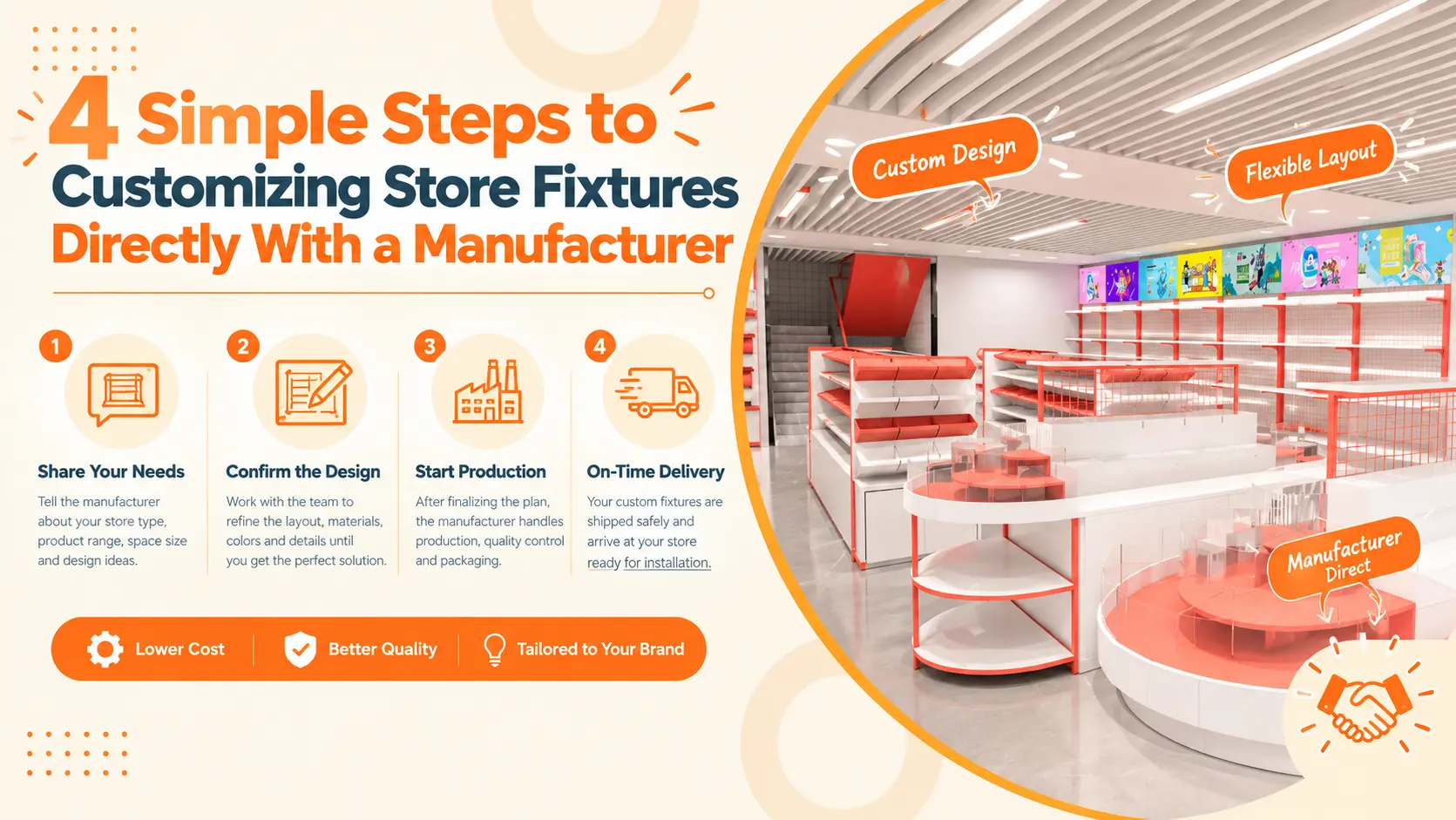
Prepare a scaled floor plan, product photos or SKUs, package dimensions, unit and case weights, required facings, quantities, preferred finish, destination port, and any known site requirements. DAHO uses those inputs to prepare custom retail fixture shop drawings before bulk production details are finalised.
Choose the fixture after you define the promotion
The strongest end-cap display fixtures make the promotion easier to see, shop, and refill. Adjustable gondola end caps are a practical default for repeatable packaged-goods campaigns. Pegboard, slatwall, and mesh suit hanging or frequently changing accessories. Baskets and dump bins need containment and price visibility. A sidekick is useful, but it is not a smaller version of a full end cap.
Before requesting a quotation, send the floor plan and the actual product list. Include pack dimensions, weights, desired facings, display period, restocking route, and local site constraints. Those details let a factory turn a promotion idea into an end-cap specification that can be manufactured, packed, and installed with fewer surprises.
DAHO Display is a China-based retail-fixture manufacturer with 20+ years of display-shelf manufacturing experience, a 40,000+㎡ production facility, and a 30+ person design team. Its work covers layout development, shop drawings, metal and wood fabrication, powder coating, quality checks, export packing, and retail fixture production for international projects.
Ready to plan the unit? Send us your product list for a custom retail fixture drawing.

Ivy is a shelving specialist at DAHO, a supermarket shelving manufacturer in China. She shares practical knowledge on retail shelving design, metal and wood fabrication, and store display systems. She helps global retailers and wholesalers understand shelving structures and choose the right factory solutions.