Supermarket shelving types are the fixture families that decide how a store moves customers and displays products. This guide walks through 10 types by layout zone, with dimensions, load ranges, and where each one fits. Get the mix right and you recover floor space and lift sales per square meter.
Key Takeaways
- Small spaces win on density and flow, not floor area. Tight stores lift sales per square meter with narrow aisles, double sided gondola grids, and end cap stacks, not by adding square footage.
- End caps on mandatory paths drive the most impulse sales. Put promotions at gondola ends (3 to 5 tiers, a 50kg+ base) and you catch shoppers on the routes they must walk anyway.
- Send your store plan to get shop drawings and a quote. Share your floor plan and product list with DAHO and the design team returns load rated shop drawings per shelf level plus a quote, so production starts from your exact spec.
What Decides the Right Shelving Mix
Store size, product category, and customer flow all shape the mix. A 90 m2 convenience store needs a different layout than a 2,000 m2 hypermarket, even when both stock the same categories. The sections below group the 10 types by where they sit on the floor.
The 10 Supermarket Shelving Types by Layout Zone
1. Double-Sided Gondola Shelving

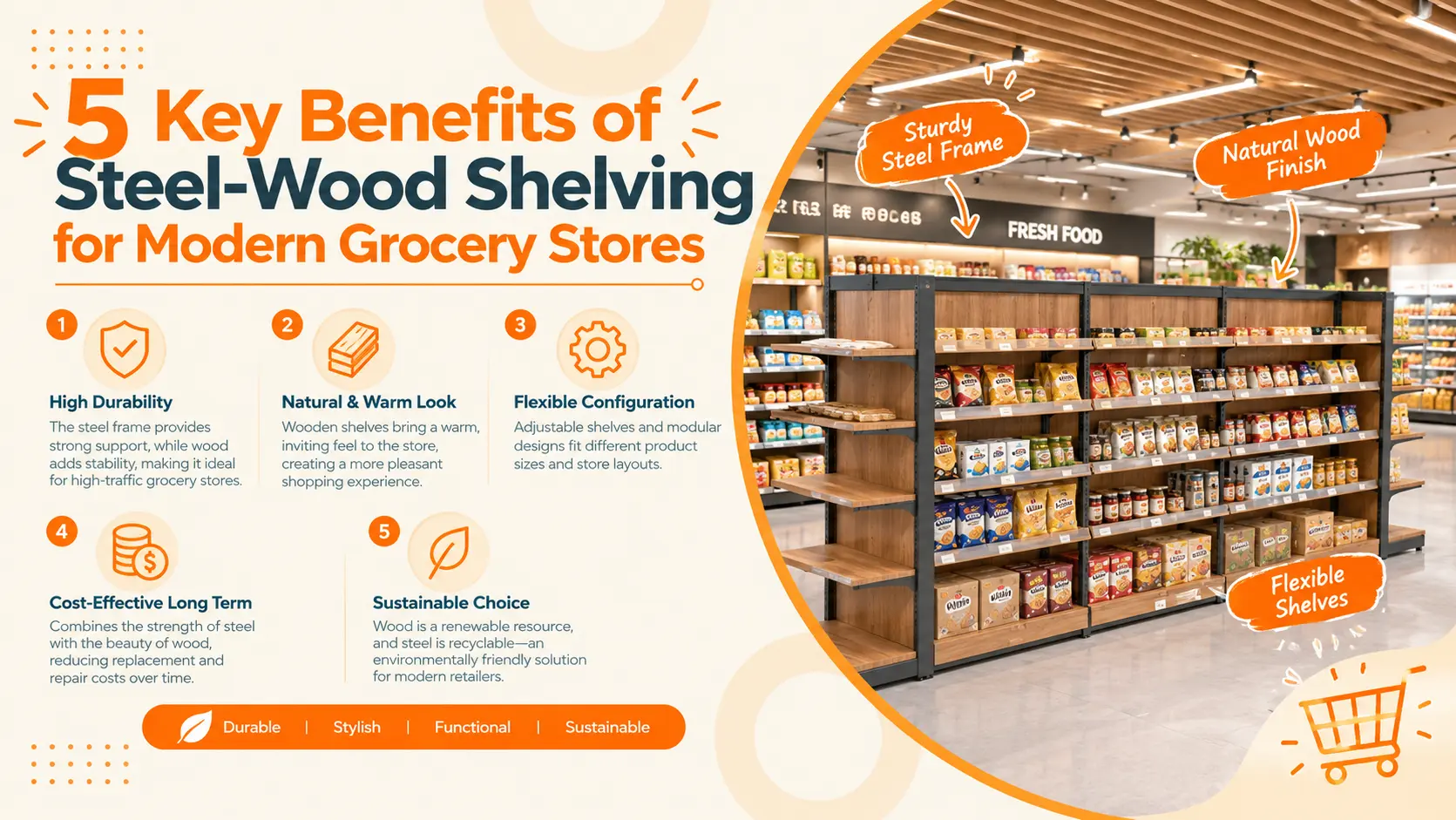
Double-sided gondola shelving is the freestanding island unit at the center of most supermarket aisles. It shows product on both faces and sets the store grid. Standard units stand 1.8-2.2m tall (about 71-87 in) and 60-90cm deep (24-35 in), rated at 20-40kg per shelf (44-88 lbs).
These hold your fastest-moving SKUs and steer the flow. Set shelf spacing to the product: 30cm (12 in) tiers for beverages, 15cm (6 in) for snacks.
Pro Tip: Leave 1.2-1.5m (47-59 in) between runs so carts and pallet jacks get through without a jam.
Explore our Gondola Shelving Guide for dimension tables and parts diagrams.
2. Wall Gondola Shelving
Wall gondola shelving is the single-sided unit fixed to perimeter walls. It runs 2.2-2.4m (87-94 in) tall and 35-50cm (14-20 in) deep, at 15-30kg per shelf (33-66 lbs). The height lets you build feature walls and preserves aisle room.
Put high-margin goods and branded back panels here.
Example: A regional grocery chain built a branded beverage wall with poster back panels, which pulled more impulse add-ons along the perimeter.
3. Gondola End Cap Displays
Gondola end cap displays clip to the ends of double-sided runs and face the main aisle. They take 3-5 tiers at 25-35kg per shelf (55-77 lbs), with a reinforced base rated 50kg+ (110 lbs+) for case-packed promos. End caps sit on the path every shopper walks, so they get more eyeballs than anything else in the store.
Key Benefit: An end cap on each gondola end turns a straight aisle into a promotion loop at no extra floor cost.
See End Cap Shelving Guide for merchandising examples and load specs.
4. Pegboard Shelving
Pegboard shelving uses a perforated back panel with hooks for hanging small goods. It puts batteries, stationery, and accessories on wall space that would otherwise stay empty. Add clear price tags so shoppers can find items without asking staff.
5. Mesh Side Gondola
Mesh side gondola is a DAHO line with an open mesh side for airflow and a lighter look. It works next to produce and on promotional runs where ventilation matters. The mesh also cuts weight, which helps at container loading.
6. Slatwall Shelving
Slatwall shelving is a wall panel with horizontal grooves for brackets and shelves. Fashion, beauty, and gift buyers like it because fixtures move in minutes during re-merchandising. Check panel thickness and bracket load rating before you specify.
7. Nesting Bag Table and Checkout Display
The nesting bag table is built for the checkout zone. It holds nesting baskets and small items for the final impulse buy, right where dwell time peaks. Put it at the register to catch shoppers on the way out.
Pro Tip: Set the checkout display at arm height so staff can load bags without stepping away.
8. Produce Display Stands
Produce display stands use slanted, ventilated trays that keep fruit and vegetables visible and easy to mist. Tiered layouts put quality at browsing height. Wash the trays to hygiene standards between rotations.
9. Jewelry Showcase and Display Cabinet
The jewelry showcase is with tempered glass and lockable doors for cosmetics, jewelry, and pharmacy boutique stock. It stands near 2m (79 in) tall and matches the store’s frame finish. Use toughened glass, not acrylic, for retail security.
10. Mobile Promotional Carts and Baskets
Mobile promotional carts and baskets are wheeled units you move without tools. They fill dead space at aisle crossings and near checkout for short campaigns. One cart can shift a traffic-driving item and leaves your fixed layout alone.
Match Shelving Types to Store Size
Store size sets the baseline mix before product category refines it.
Small Convenience Store (up to 100 m2)
Run wall gondolas along the perimeter. Add 1-2 double-sided units for top SKUs and use end caps for promotions. One or two promotional carts by the checkout cover impulse traffic.
Standard Supermarket (100-500 m2)
Build a grid of double-sided gondolas through the center. Use wall gondolas for the categories you want to feature and put an end cap on every run. Place 3-5 promotional carts at aisle crossings.
Hypermarket (500+ m2)
Assign fixed shelving per zone: gondolas carry grocery, a mix of wall units and gondolas serves health and beauty, and wall gondolas show premium lines. Run 10+ promotional carts and rotate them by campaign and crowd flow.
Key Benefit: Sizing the mix to the store spares dead floor space and cuts procurement waste on the first order.
Shelving Types by Product Category
The table maps common categories to the fixture that fits.
| Product Category | Recommended Shelving Type | Key Consideration |
| Premium beverages, imported foods | Wall gondola shelving | Back-panel posters build a branded zone |
| Beverages, dairy, paper goods | Gondola + end caps | Standard SKUs on gondolas, promos on end caps |
| Packaged food, daily essentials | Double-sided gondola | Grid layout groups similar items |
| Promotional or clearance items | End caps, promotional carts | Rotate stock to drive impulse buys |
| Batteries, stationery, accessories | Pegboard shelving | Hook spacing and clear price tags |
| Fresh produce | Produce display stands | Mist often; tiered layout shows quality |
The load ratings above are typical ranges. Your final spec depends on shelf depth, back panel type, and the product category on display.
Review Supermarket Layout Strategies for traffic-flow planning.
Common Mistakes When Planning a Shelving Mix
1.Copying a competitor’s mix instead of your own store size and category data.
2.Overusing end caps so promotions lose focus.
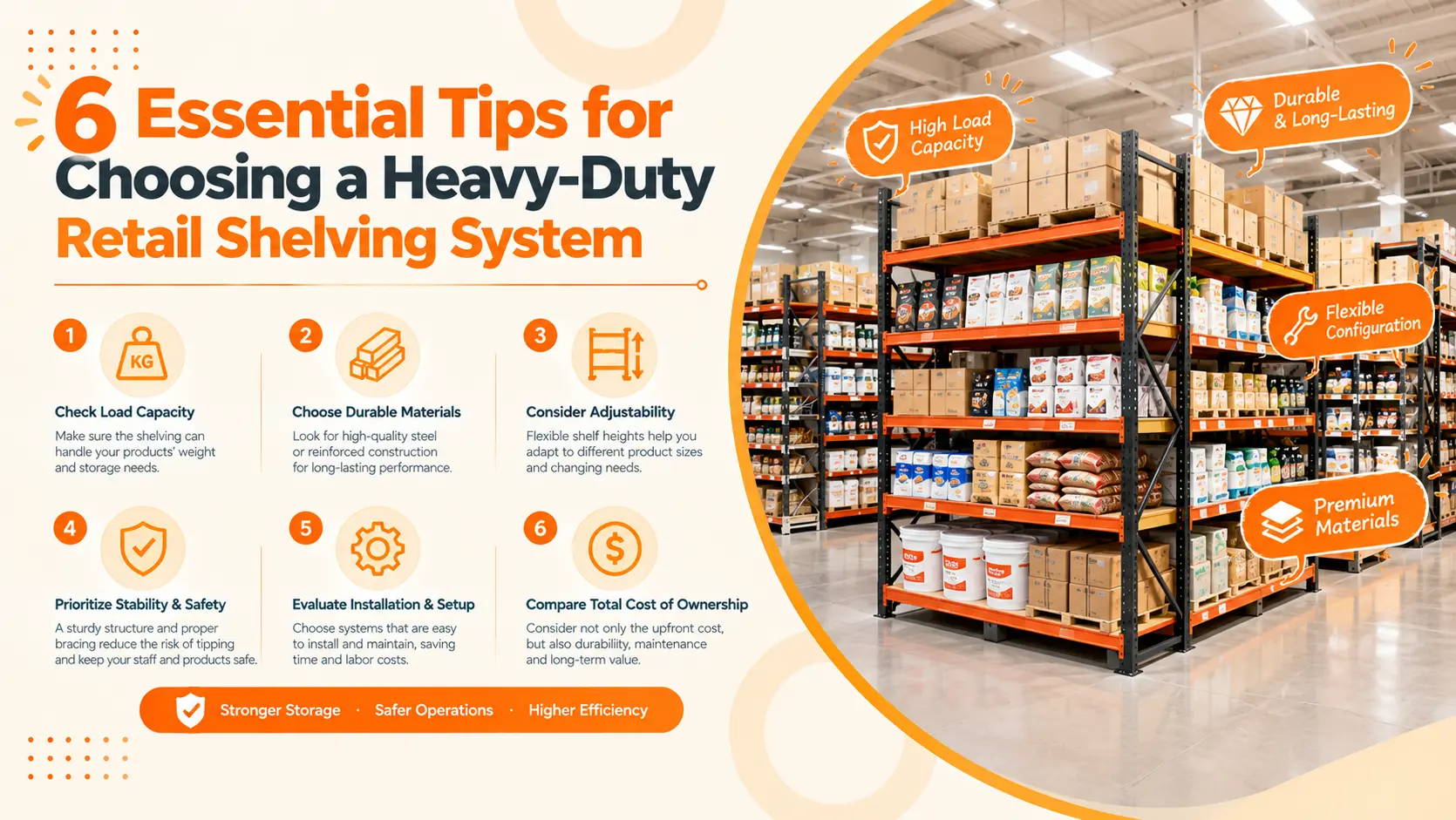
3.Ignoring load ratings and bending shelves.
4.Skipping shop drawing approval before production starts.
5.Leaving container loading out of the plan, which wastes FCL space.
Pro Tip: Approve shop drawings with load per shelf level before production starts, so the factory builds to your exact plan.
FAQ
What are the most common supermarket shelving types?
The core types are double-sided gondola, wall gondola, end cap, pegboard, and produce stands. Most stores add slatwall, display cabinets, and mobile carts based on size and category.
What is the difference between gondola and wall shelving?
Double-sided gondola is freestanding and shows product on both faces in central aisles. Wall gondola is single-sided and fixed to a perimeter wall, reaching taller for feature displays.
What shelving works best for small items like batteries and stationery?
Pegboard shelving with hooks puts small goods on wall space and keeps price tags visible. Slatwall works too if you re-merchandise often.
How do I source custom supermarket shelving from a China factory?
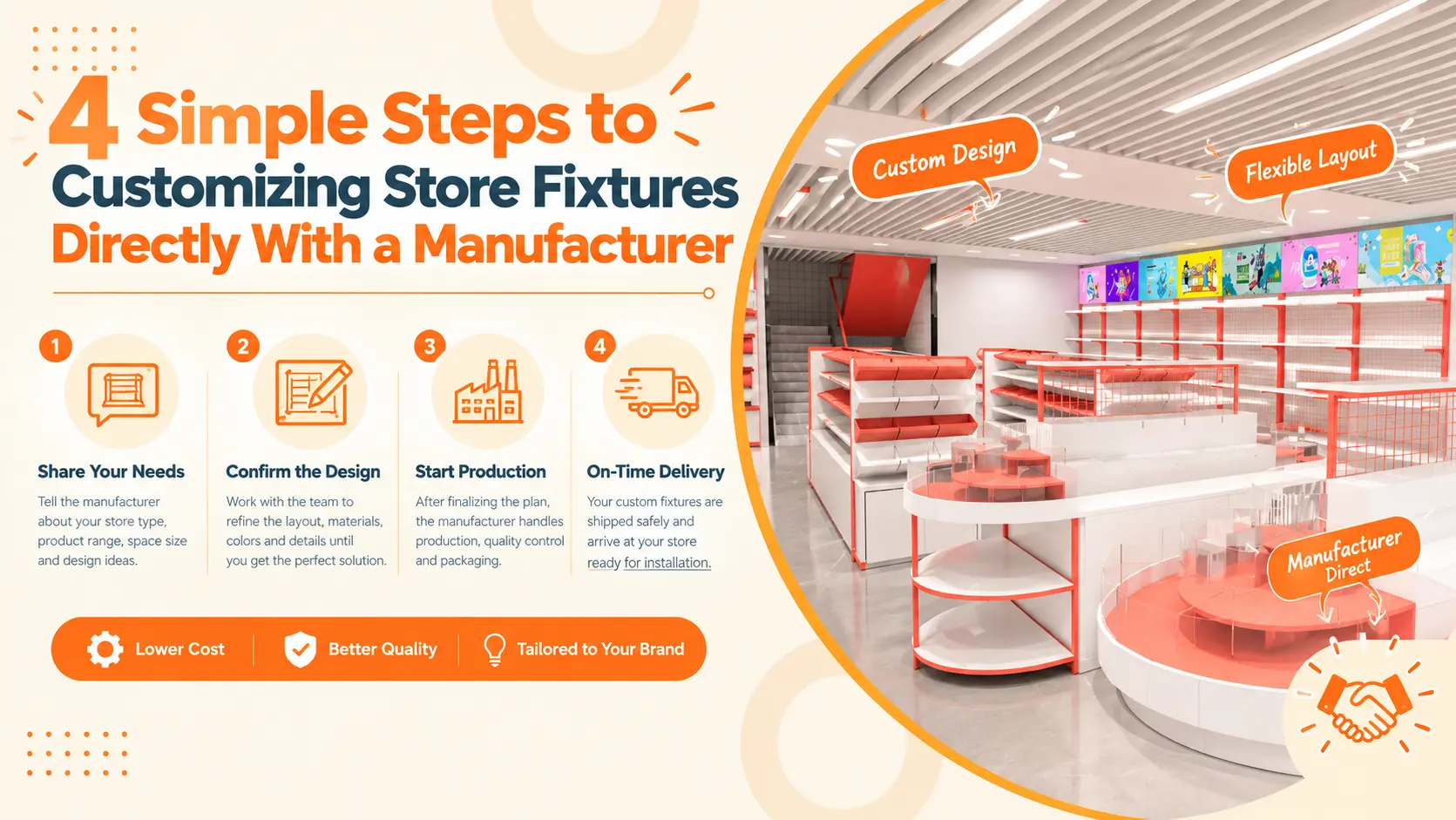
Send your store plan and a spec list to a manufacturer with verified capacity. DAHO runs CNC fabrication, powder coating, and export packing under one 40,000+ m2 roof, with ISO-9000 certification since 2010.
Learn how to Source Custom Supermarket Shelving From China Manufacturers with confirmed MOQ, sampling, and shipping steps.
Get Your Shelving Plan Built
Ready to plan your mix? Our design team returns shop drawings with load specs per shelf. Contact us to start the build.

Ivy is a shelving specialist at DAHO, a supermarket shelving manufacturer in China. She shares practical knowledge on retail shelving design, metal and wood fabrication, and store display systems. She helps global retailers and wholesalers understand shelving structures and choose the right factory solutions.